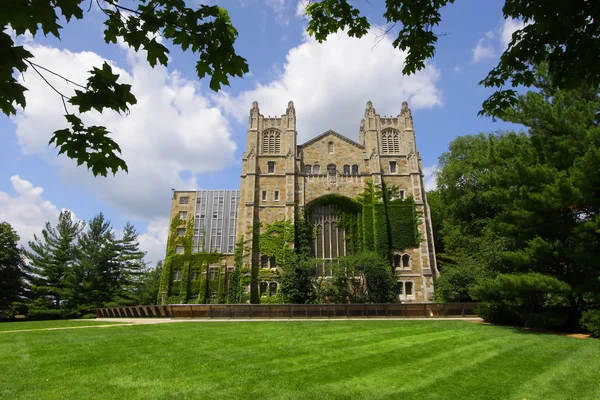
He gives four reasons for being grateful. I talked about the first three in my last three posts: that he and his people were alive during such an interesting era, that they lived in the comparative freedom and safety of America, and that they (especially the students present) were able to get a college education.
His concluding reason is short but interesting:
“In the last place, but by no means last in importance, one good ground of gratitude today — if I am grateful — is just the plain, simple fact that I am grateful. All the joy that is to be had, of this one life which we have to live, is ours for the mere price of recognizing it when it comes. It is entirely up to me whether I face the morning with a scowl or a smile. Whether my books are a drudgery or a delight. Whether my business downtown is a bore and a burden, or a source of happiness. Whether my home duties are irksome or pleasant. Whether my thoughts bring me satisfaction or pain.
“My mind, to me, a kingdom is. And as a man thinketh in his heart, so he is.
“And the kingdom of God is within us. All happiness and contentment is generated inside ourselves. Therefore, it is a great thing just to be thankful — just to be conscious of the largeness and richness of our lives. And, if we are thankful, it goes without saying that we shall want to help our fellow-pilgrims to the same happy and contented state of mind. For this habit of thankful, grateful contentment with life makes for steadiness of character, strength of purpose, inner peace, and the poise which all men covet.
“Thus endowed, we master many a grief and overcome many a disappointment that would crush us, but for this spiritual power.”
He gives four reasons for being grateful. I talked about the first two in my last two posts: that he and his people were alive during such an interesting era, and that they lived in the comparative freedom and safety of America.
His third reason is directed at his audience, which is made up of students, professors, and administrators from the University of Michigan. But he is especially talking to the students. He says “it is surely a ground for gratitude that so many of us are able to train our minds to think clearly and to gather up the accumulated wisdom of the ages and make it ours, at this seat of learning.
“When I think of the thousands who envy us and wish they had our chance at life’s larger privileges, and then am forced to reflect that, every day, I pass so many of these advantages by, thoughtlessly — it gives me cause for shame.
“For how many cramped lives are yearning for just a modicum of the chance we have at life — men and women who would be entirely satisfied with the crumbs that fall from the table where we sit, sometimes half-bored, jaded, and dyspeptic!
“We have even been known to rebel against the ardent endeavors of our counselors to put us into contact with the mental and spiritual energies that drive the world, and have plotted and schemed to avoid the privilege of developing the only life we have.
“Millions exist in a weary treadmill, standing all day at the mouths of white-hot furnaces, groping in the depths of dangerous mines, tending nerve-racking machinery in the shops, or eking out a wretched living in some monotonous work which they hate.
“For you and me (and just why is it for you and me, and not for them?) the ways of life have been made smooth; achievement easy; honor and high attainment not only possible but the natural order of events. Surely we have cause for thankfulness in this — a thankfulness that ought to beautify our characters and shine in our eyes, and lend us courage for whatever little labors and perplexities are incident to the rich and free and full life handed to us as a gift which we have done nothing to merit — but for whose uses we shall be held strictly accountable by the Spirit who issues and controls our destinies.”
He gives four reasons for being grateful. The first (which I talked about in the previous post) was the fact that he and his people were alive during such an interesting era.
The second: “I am glad that I am permitted to live in this country. How would you like to be spending the only life you have to live in Russia these days? [The revolution in Russia had begun two years earlier and was still going on.] Or would you have preferred Armenia? [Their fate was uncertain in 1919.] How about Germany? [Having lost the war, they were expected to pay everyone else’s bills.] Can you think of any other country on the face of the earth that could offer you as much of advantage — security — liberty — and general satisfaction as this land in which we live?
“To be sure, we, too, are in a maze of serious problems; but they are not problems of how to deal with hardships so much as how to deal with excessive prosperity. It is not our poverty that has bothered us but our marvelous national riches.
“We are not now worried over the problem of trying to secure a larger liberty, but how to regulate those who would abuse the liberties that have been tendered them with such prodigality. Our industrial problem, for example, does not consist of a situation in which labor has more work than it really ought to be asked to do, but how to give the laboring man a contented mind, now that he has so much time on his hands to fret about the limitations of his job.
“Our problems are serious; but they are all problems arising out of progress, and not of repression or slavery. Any child in this country who wants an education can get it, and when he completes what the state has to offer him, absolutely free of cost, he has the equivalent of the education offered by the average college only twenty-five years ago.
“Any child who is lacking in mentality can find a safe refuge where his small capacities are trained to the utmost. A little while ago, the village idiot roamed the streets, either as an object of ridicule or crude and bungling sympathy of curious neighbors. In almost all the other nations of the world, such condition obtains at this hour. Here, the little child with the lame foot is invited by the state to come and be made whole, at the expense of the people.
“There is very little actual misfortune in America for which no remedy has been devised. There never was a more tenderhearted, more philanthropic nation known to human history. With all our obvious blunders, our mad rush, our almost insane desire to take shortcuts to prosperity (in the course of which we miss much, if not most, of the real satisfaction of life); with all our hard driving, and fierce competition, we are obliged to admit that our America, today, is, by all counts, the most livable country in the world.
“We can be thankful that it has been given to us to spend what little time is allotted to us on earth, right here in the United States.”
The first, he says, “is that we are alive in this remarkably interesting period of the world’s life…. [W]e seem to have but one brief visit to this world in which we now live. And it is not for any of us to choose the time for that single visit. This is of considerably more importance than would appear on first thought. Even the distant friend, visiting our own little Ann Arbor for just once in his life, would deem himself fortunate to have arrived yesterday at the annual homecoming — everything a riot of color and a wealth of welcome. He would have formed quite another impression, had he visited us about the first of September, when the place had all the marks of a deserted city.
“The same thing is true of our visit to this old planet — earth. It is of great consequence that one’s single, brief stay here should occur when there is something really doing, something important afoot….
“Of certain generations in the Christian era, very little is preserved. Indeed, there are certain cloudy strips of time, about midway of civilization’s journey from Golgotha to Verdun, so innocent of any real achievement that we really know nothing about men’s thoughts, deeds, or aspirations for periods of three or four generations laid end to end.
“Now, if I am to have only one life in this world, I am glad that I didn’t have to take my turn then.
“Until very recently, a considerable portion of the earth-dweller’s time and energy was occupied with the business of keeping alive and dealing with bodily discomforts. I am not an extremely old gentleman; yet, in the course of my life I have seen common life made more enjoyable. I remember very distinctly when the streets of Ft. Wayne, Indiana (which was the nearest large town) were lighted for the first time by electricity, and what an object of curiosity it was! In the town in which I lived then — a place of 2,000 population — a man drove around in a cart every evening and lighted a few oil-burning lamps. Most of the sidewalks were wooden, and the long planks had a trick of warping and becoming disconnected at one end, to the occasional undoing of pedestrians groping their way along the dimly lighted streets — streets that would mire a wagon almost any time in spring, and from which blinding clouds of dust arose all summer.
“I was ten when I saw a telephone for the first time, and several years older before I had occasion to use one. Such surgery as we had was very crude, and employed only as a last resort — and, if my memory serves me correctly, it generally proved to be, indeed, the last resort of the patient.
“I shall not forget the tremendous excitement that was caused when the first automobile appeared in town. It had only one cylinder and was in appearance like an old-fashioned buggy. The more discerning businessmen of the place agreed that it was an interesting toy, but assured one another that it would never be made practical. My own pet ambition as a little boy was to own some day one of those bicycles with a front wheel about five feet in diameter, trailed by a very small wheel less than a foot high. Altogether, it was a deadly weapon, but quite the thing with all the young men of the period. Practically the whole business of automatic machinery has come into being in the course of my own lifetime. I am thankful, today, that I have lived to see so many drudgeries of life rendered unnecessary.
“It is good to be living in a time when one does not have to spend quite so much of one’s nervous energy in the business of just keeping alive, and trying to cope with discomforts….
“Moreover, there are certain great issues before men’s minds today which serve to make this age of peculiar interest. The whole social order — the world ’round — is in a state of change. We know not what the next little group of years will bring forth, but we know that they will produce some radical revisions of our recent processes of living.
“There have been whole centuries when men grew up from boyhood to take over their father’s farm or shop or office and live precisely the manner of life that had been lived by their predecessors. Until very recently, the average American, speaking of his foreign-born neighbor, said, ‘He came from the Old Country.’ Which old country didn’t matter. All old countries looked alike — somewhere across the sea, they were.
“Now we have achieved an international consciousness — not an international conscience, as yet, but a recognition of the existence of other peoples and a growing desire to see them rid themselves of their old-world burdens of ignorance, disease, drudgery, and despair.
“True: the new knowledge has but added to our responsibilities and increased our obligations, but it is a great thing just to be alive in this period that shall be known in history as an era of radical changes more significant than any changes which have befallen human experience since the dawn of Christendom, nearly twenty centuries ago.
“I am thankful that, having but one life to live, I am permitted to be in the world now.”
Douglas had only been in Lancaster, Ohio, for a year when he was honored with an unusual preaching opportunity. The city had a Ministerial Association through which the local Protestant ministers kept in touch with each other and cooperated in certain ways. Each year on Thanksgiving, they held special Union services in a few designated churches around town. Attendance was usually good, considering the fact that the members of the city’s many churches all gathered at only two or three places, chosen in advance by the Association. Because the occasion was Thanksgiving, a special collection was taken, and the monies received were split among the participating congregations.
In 1906, Douglas was selected to preach at the largest of the three host churches, and newspaper accounts say that the place was crowded. The message Douglas delivered that morning made a difference: it altered (at least slightly) the history of Lancaster.
Preaching on the text “Greater love hath no man than this, that he lay down his life for his friends,” Douglas asked the congregation whether they were Jesus’ “friends.” He dwelt on that question a while, making sure heads were nodding all around the room, then drove home the point that friendship with Christ, who gave his life for us, must manifest itself in “a keen desire to help others.”
There must have been gasps of disbelief as he gave the following description of their annual Thanksgiving Union service:
“We have come together in times past to eulogize ourselves for our prosperity, and readjust our homemade haloes… and brag and boast about what all we have to be thankful for, after the order of the Pharisee’s Thanksgiving prayer, ‘Lord, I thank thee that I am not as other men are!’ We have even been so stupidly indifferent to the great tasks that belong to us, that we have divided our pitiful little Thanksgiving offering of nickels and dimes among the various church treasurers for them to use for their respective poor; and the church treasurers, for the most part deeming their own treasuries to be the most poverty-stricken creatures in town, have emptied this treasure into the coffers of their own churches, where it gently and silently evaporated into a calm, sweet nothingness…
“It wasn’t fair. It wasn’t right. Christ wants and has a right to expect something better of his friends.
“If you have a thankful heart this day, reveal it by your sacrifice. Then let this handsome gift, amassed, initiate some fund that will put us on record for having this day, as friends of Christ, remembered in gratitude the boundlessness of his love…”
All of this was prelude. Now came the pitch: it was time to build a hospital in Lancaster.
“Every few days we are confronted with a problem, gigantic and soul-searching. A man is severely wounded. Maybe his home is not appointed to meet the exigencies that have arisen. He must be subjected to an operation. He must receive the most careful subsequent attention. One of two courses lies open. Either he must run the gauntlet with the pitiable circumstances in his humble home… or else the other alternative will be chosen and he is taken on a cot in the baggage car to Columbus for hospital treatment. And if he has not all the odds in his favor, in either case he hasn’t had a fighting chance.”
Douglas went on to argue that it made as much sense from a civic as from a religious perspective to build a hospital in town rather than shipping people off to Columbus for medical attention. He added:
“I believe that the highest adoration to God is rendered by the man who accompanies his ‘Praise God from whom all blessings flow’ with a check on his bank account. I believe that a man can express more real, conscientious Christianity with his pocketbook than with his prayer book.”
As one of the local papers remarked, “So effective were his words that at the conclusion of his address Mr. James T Pickering [Lancaster’s Postmaster General] arose and moved that the day’s collection be used as the nucleus of a hospital fund. The motion met with practically unanimous approval and the offertory which followed aggregated over $100.” These were 1906 dollars, bear in mind. One online calculator estimates that it would be $3018.84 in 2021 dollars. By comparison, the collection at the other two Union services totaled $4 ($12 by today’s values).
In 1907, the “Park Street Hospital” opened in a private home in the 200 block of Park Street. It was not unusual for cities of that size to set up their first hospitals in houses. The city where I live (Kalamazoo, Michigan) did the same thing : Borgess Hospital in Kalamazoo began in 1889 in a private residence, and what is now Bronson Hospital did the same thing in 1900. (See Jacqueline L Wylie and Anna M Stryd, Bronson Women and the School of Nursing: Journeys Through One Hundred Years (Kalamazoo: Alumni Association of Bronson Methodist Hospital School of Nursing, 2005), pp 4, 9-10.)
Others had pushed for a hospital in Lancaster prior to November 1906, but Douglas’s sermon helped move the project along. Most of us never get a chance to make history, even on the local level, but Douglas did. And it started as nothing more than an opportunity to preach. It tells us something about Douglas that he saw larger possibilities in that invitation.
For a free PDF copy of the booklet, The Secret Investment of Lloyd C Douglas, fill out the form below:


 The Lloyd C Douglas Page